Social feeds flatten every fan engineering project into a single word. A native PlayStation 3 static recompilation gets called an emulator, a Nintendo 64 hardware backport gets called a demake, and a two-game shared-memory bridge gets dismissed as a skin swap.
Those labels describe different technical pipelines. The category tells you whether a project runs at native desktop frame rates, whether it needs your own retail disc or Steam install, and why some repositories stay online while others draw copyright takedowns.
The label tells you what is inside the zip: new art, hooked memory, translated machine code, or recovered C source.
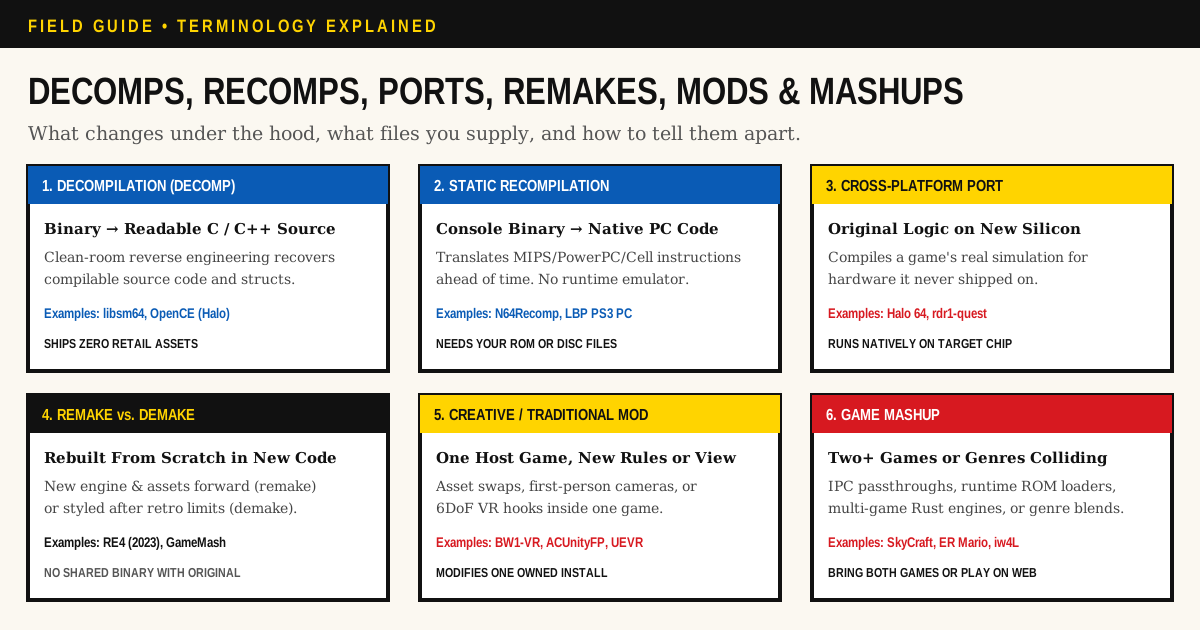
| Project type | What happens to the code | Runs inside an emulator | What the player supplies | Example on Game Mashups |
|---|---|---|---|---|
| Decompilation (Decomp) | Binary is reverse-engineered into human-readable C or C++ source | No | Original ROM, ISO, or retail install | libsm64 in ER Mario, OpenCE in Halo 64 |
| Static Recompilation (Recomp) | Console binary instructions are translated ahead of time into native C or x86-64 | No | Original console ROM or disc files | LittleBigPlanet PS3 PC port |
| Cross-Platform Port | Original engine or decompiled source is compiled for a new CPU and GPU | Only if targeting retro consoles on PC | Retail game files for asset extraction | Halo 64, rdr1-quest |
| Remaster / Remake | Remaster updates assets on old code; remake rebuilds everything in a new engine | No | Store purchase or browser tab | RE4 Ultimate HD (remaster) vs. GameMash (clean-room rebuild) |
| Demake | A modern game is recreated under the visual or hardware rules of an older era | Depends on whether it targets real retro silicon | Nothing for Unity demakes; retail ISO for hardware ports | Stylistic PC demakes vs. real cartridge ports like Halo 64 |
| Mod | A plugin, asset archive, or DLL alters a single host game | No | One owned host game | Black & White VR, ACUnityFirstPerson, Really Useful Dragons |
| Mashup | Two or more distinct games or genres share one screen and control loop | No | Both owned games (for BYO mods) or a browser | SkyCraft, 2010 Rust Rewrite, Leon in the Lands Between |
1. Decompilations (Decomps) vs. Static Recompilations (Recomps)
Both decomps and recomps start with a compiled binary after the original studio's source code is locked away. They diverge in how much human cleanup happens before the code compiles again.
A decompilation (decomp) turns a compiled executable back into structured, human-readable C or C++ source code. Traditional matching decomps (such as the Super Mario 64 and Ocarina of Time projects) reconstruct functions, structs, and variable names by hand. Their goal is C source that compiles back into a byte-for-byte match of the retail ROM. Non-matching decomps prioritize readable, modifiable source over identical assembly output.
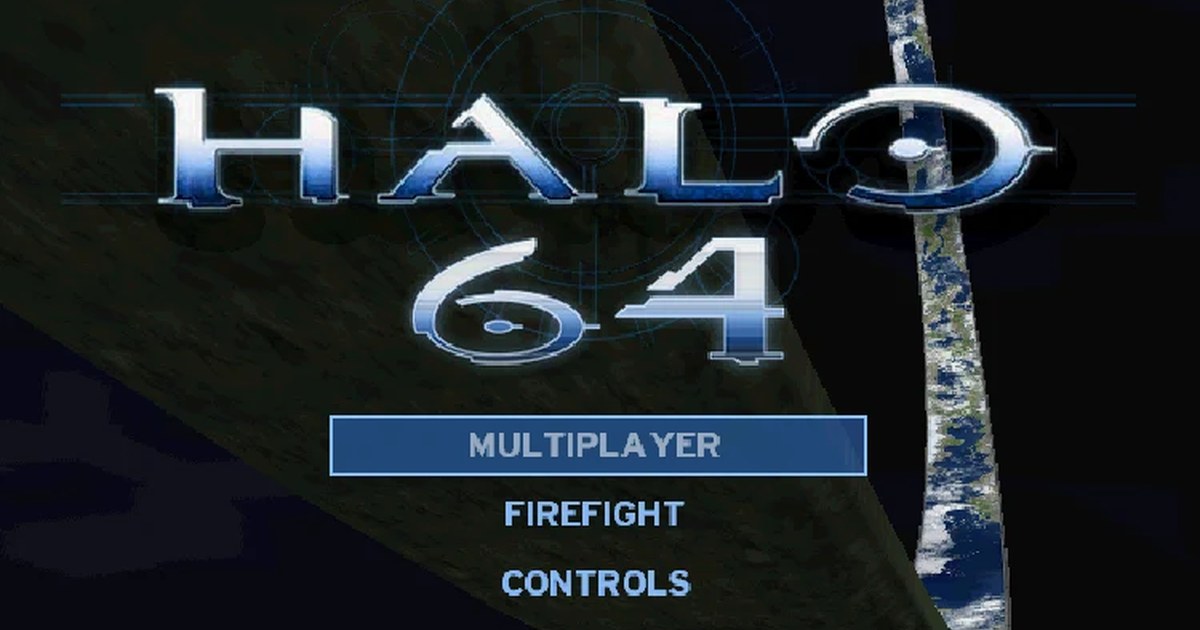
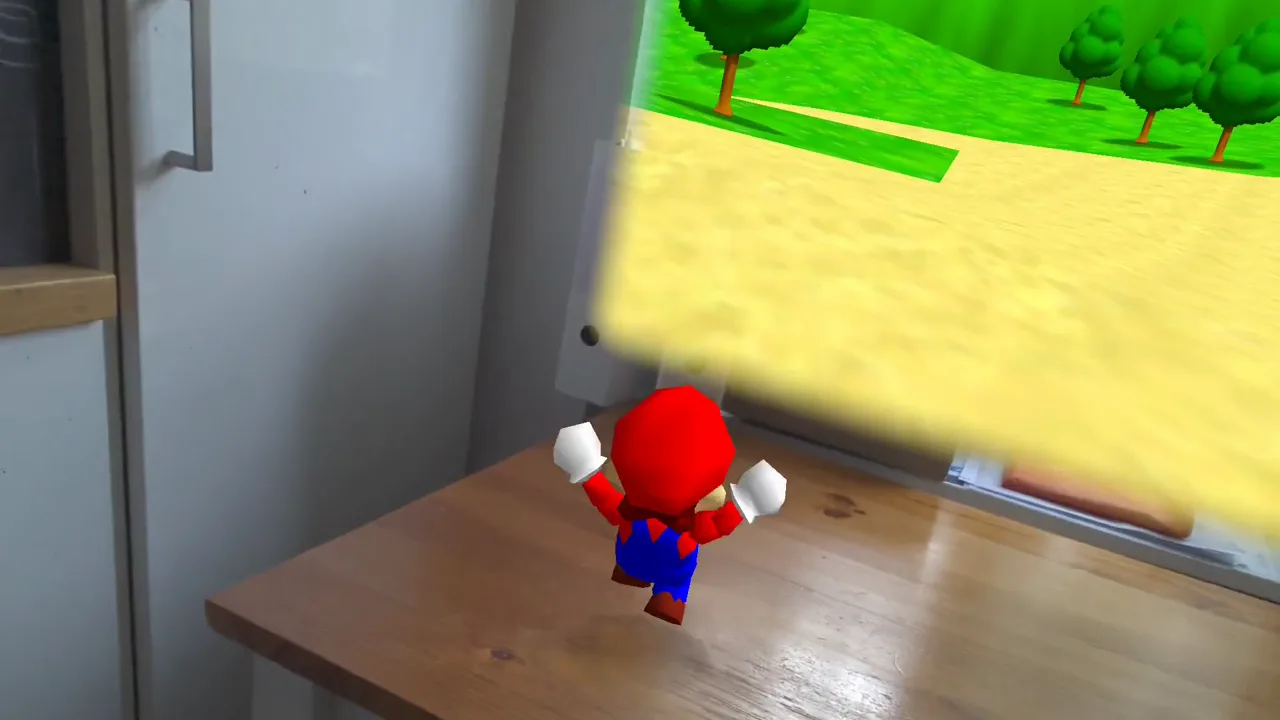
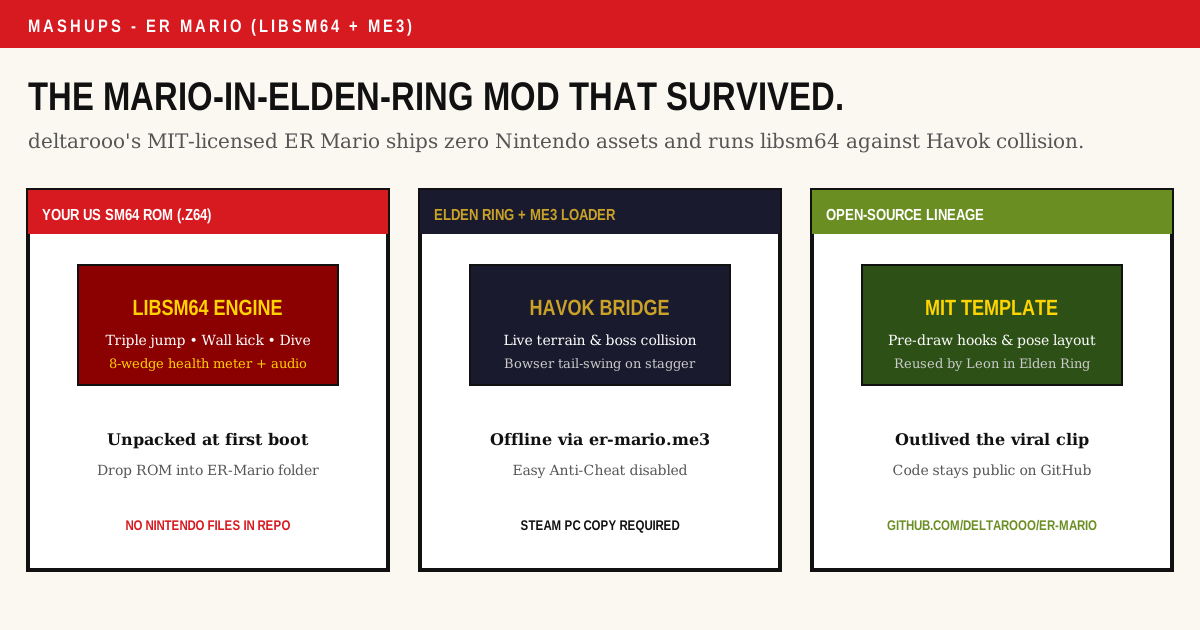
Once a game is decompiled into clean C, its simulation is no longer tied to its launch console. Modders packaged the Super Mario 64 decompilation into libsm64, a portable physics library that ER Mario injects into Elden Ring. Likewise, Halo 64 forks OpenCE (halo-ce-universal), a decompilation of the 2001 Xbox release of Halo: Combat Evolved, and compiles Bungie's 30 Hz C simulation loop for a 93.75 MHz Nintendo 64 CPU.
A static recompilation (recomp) skips the years-long quest to write clean, human-named C source. Tools like Wiseguy's N64Recomp, XenonRecomp (for Xbox 360 PowerPC binaries), and ps3recomp read a console executable and mechanically translate every CPU instruction into equivalent C functions ahead of time. Developers then link that generated C code against a modern graphics backend (such as Vulkan or Direct3D 12) and reimplemented operating-system calls.
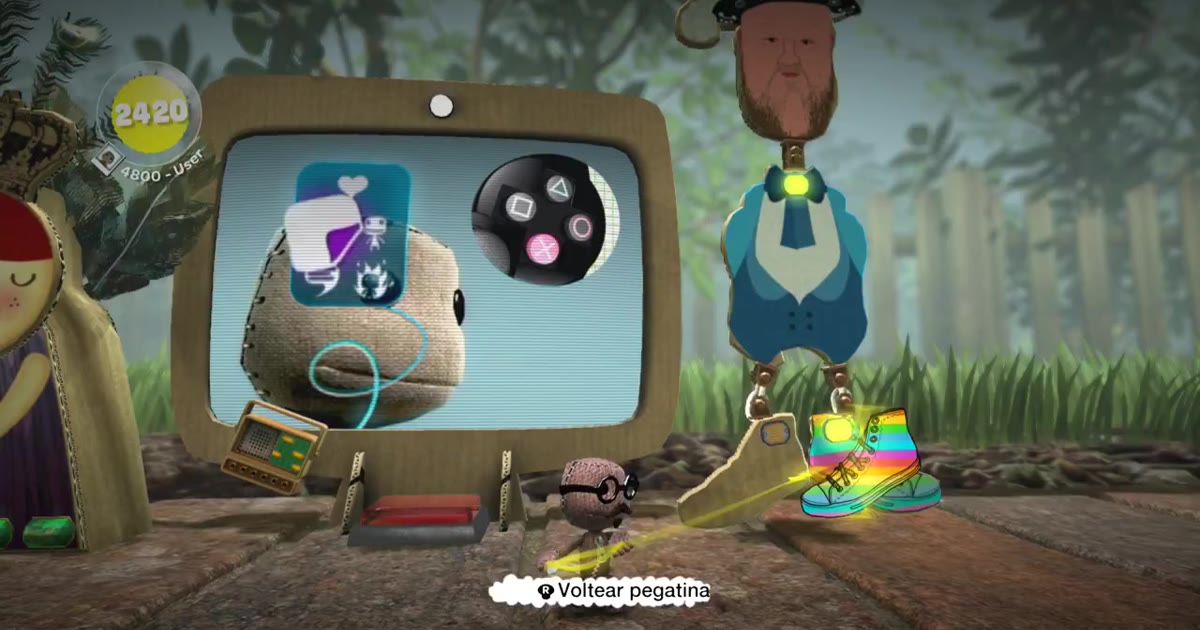
Static recompilation is not emulation. An emulator like RPCS3 or Xenia translates console instructions on the fly while you play, paying a heavy CPU tax every frame. A static recomp does that translation once at build time and outputs a native Windows or Linux executable. When Ende18 showed LittleBigPlanet running natively on PC without RPCS3, the build used static recompilation of the PlayStation 3 Cell binaries paired with a Vulkan renderer.
2. Ports vs. Remakes, Remasters, and Demakes
A port moves an existing game's underlying logic and asset pipeline onto hardware or an operating system it did not launch on. Fan ports come in three flavors:
- Decomp and recomp ports: Compiling recovered or statically translated code for a new chip, such as Halo 64 moving from a 733 MHz x86 Xbox to a big-endian MIPS Nintendo 64.
- Binary wrapper ports: Hooking a shipped binary compiled for a cousin platform. For example,
rdr1-questtakes the 64-bit ARMlibrdr.sobinary from the Android release of Red Dead Redemption, wraps it with OpenXR hooks, and sideloads it onto a standalone Meta Quest 3 headset. - Engine reimplementations: Writing a fresh open-source runtime that parses the original retail installation directory. Port0r's The House of the Dead VR and chasmlol's 2010 Rust Rewrite (
iw4L) both write new engines that read your owned 1998 or 2009 game files off disk.
A remaster keeps the original core engine and gameplay code intact while upgrading textures, audio, resolution, or frame-rate caps. A remake throws out the original binary and rebuilds the game from scratch in a new engine with new models, animations, and level geometry.
That distinction breaks mods all the time. SupMyNinja07's Leon in the Lands Between requires the 2014 Steam Ultimate HD Edition of Resident Evil 4, which is a remaster of the 2005 GameCube/PC code. Capcom's 2023 Resident Evil 4 is a ground-up RE Engine remake with completely different file archives and bone hierarchies, so the mashup loader cannot read it.
A demake reimagines a modern game for an older hardware generation. Most projects labeled "PS1 demake" or "N64 demake" on social video feeds are stylistic demakes built in Unity or Unreal Engine 5 using low-resolution shaders and vertex snapping. They only run on modern PCs. By contrast, Halo 64 is a genuine hardware backport. It compiles into a .z64 ROM image that fits inside 8 MB of Nintendo 64 RDRAM and 4 KB of texture memory, booting on a physical 1996 console.
3. Mods vs. Game Mashups
A mod modifies a single host game. Traditional mods swap meshes and sounds inside the host's asset format, like Skyrim's classic Thomas the Tank Engine dragon mod.
What we catalog under Creative Mods goes deeper into the executable without adding a second franchise. Camera mods like Michael Clark's ACUnityFirstPerson or Project Viewpoint (pzvr) rewrite rendering cameras and animation bone locks. Flat-to-VR conversions like praydog's UEVR, Buck's Black & White VR, Cosmic Tangerine's Dishonored 2 VR, and chortdev's Dead Space 2 VR inject stereoscopic Direct3D rendering and 6DoF hand tracking into flat PC games.
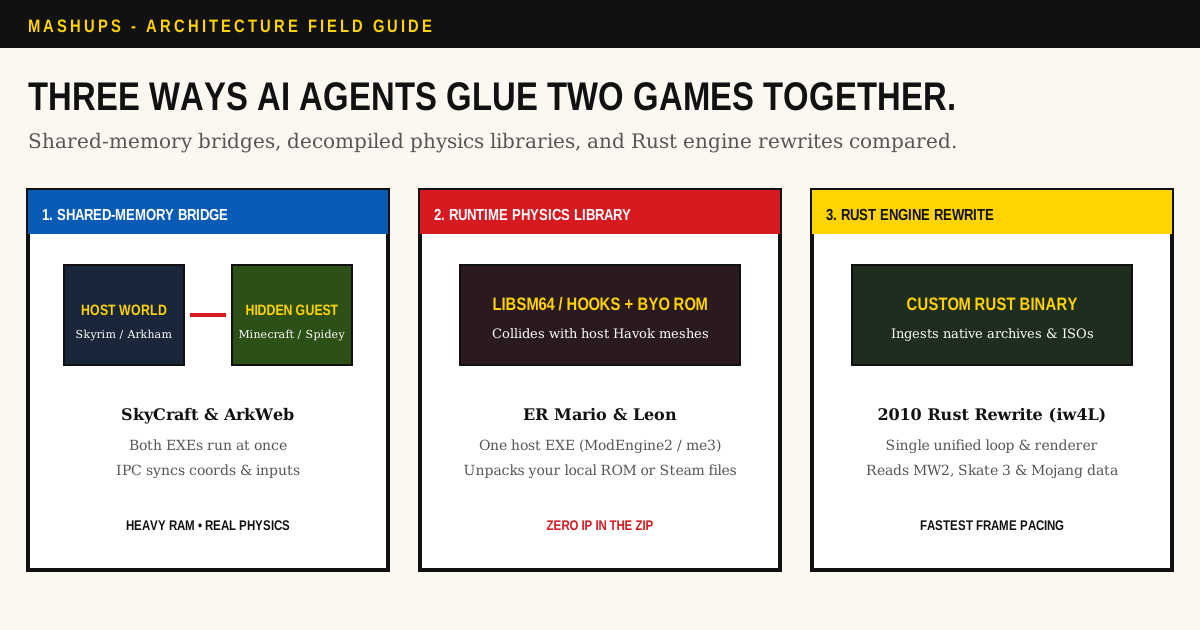
A mashup combines the worlds, characters, physics, or core rules of two or more games. As our three-architecture breakdown details, playable mashups fall into four distinct builds:
- Shared-memory passthroughs: Two full commercial games run at the same time on one PC and sync state over an inter-process memory pipe (SkyCraft links Skyrim and Minecraft; ArkWeb links Spider-Man Remastered and Batman: Arkham Knight).
- Runtime BYO bridges: One host game runs with an injected DLL that loads a second game's decompiled physics library or Steam asset folder at boot (ER Mario and Leon in the Lands Between).
- Multi-game engine rewrites: A custom executable parses retail archives from two or three games at once (2010 Rust Rewrite combines Modern Warfare 2, Skate 3, and Minecraft).
- Designed genre hybrids and clean-room web rebuilds: Commercial crossovers with publisher permission (Cadence of Hyrule, Puzzle Quest) or browser games written from scratch with original code and art (Slay the Spore, GameMash).
Ready to explore the tools and communities behind these builds? Read our guide to making your own mashup or browse the Resources directory for repositories, Discords, subreddits, and developers to follow.