I love Slay the Spire. I was also swept up by the original Spore hype. So when a browser game titled Slay the Spore surfaced, I opened the tab expecting more. I left underwhelmed.
You can play it yourself at vibedgame.com/games/slay-the-spore (our catalog card is /mashups/slay-the-spore/). The listing credits op__nico, launch date 9 July 2026, engine Three.js, tools Antigravity with Gemini 3.1, then Codex, and notes that it runs in a browser and on phones. The pitch on the page is almost exactly the title: Slay the Spire meets Spore. I am not here to re-review the store copy. I am here to report what the session felt like.
Honestly it felt like a fever dream of a game.
That sentence showed up in my notes before any attempt at a tidy summary. It is still the most accurate line I have.
What I saw
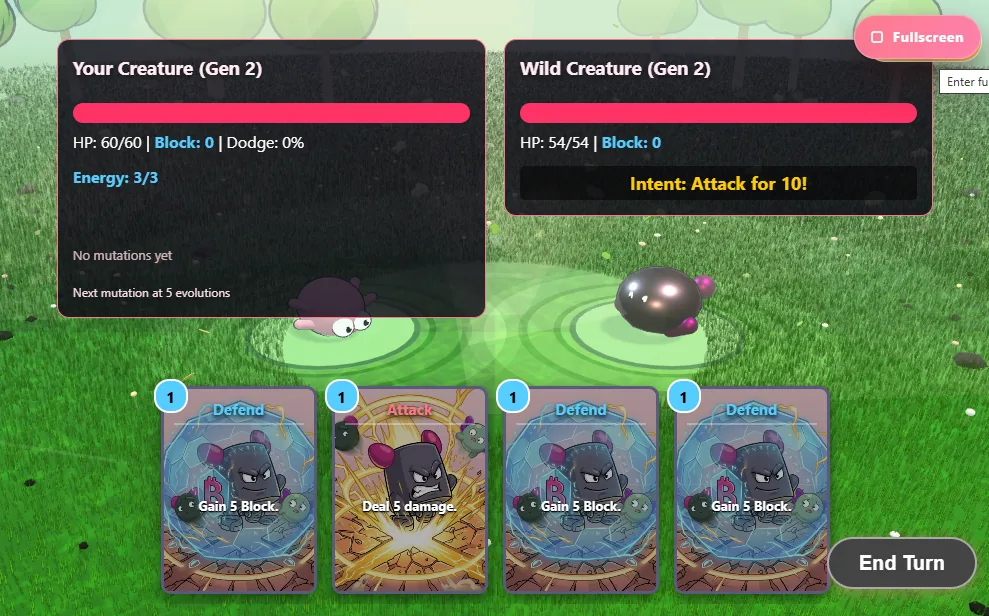
The public page promises a browser session; that matches how I reached it. My own screenshot from the grassy arena is the evidence I trust for the combat stage. It shows a Gen 2 fight: Your Creature (Gen 2) at HP 60/60 versus a Wild Creature (Gen 2) at 54/54, Energy 3/3, enemy intent Attack for 10!, and a hand of three Defend cards (Gain 5 Block) plus one Attack (Deal 5 damage), each costing 1. Trees and grass sit behind the critters; the UI chrome rides the top of the frame. A quiet line under my creature promised Next mutation at 5 evolutions, with the board still waiting on that promise.
If you have played Spire, you can already read that frame. That is both the onboarding success and the ceiling I bumped into. What I can verify from my session and that capture is the combat stage, the card verbs, the generational labels, and the intent banner. I am not going to invent a late-run mutation tree I did not see.
Where the strange vibe comes from
Two details kept knocking me out of the Spire muscle memory I brought with me.
The soundtrack felt less like a dungeon crawl and more like I had tuned into a French pop ballad radio station and forgotten to turn it off. I mean that as description, not as a roast. It gives the grassy arena a mood that neither parent franchise prepared me for. The cards say Spire; the speakers say something else entirely.
There is no animation when you play cards. You click; numbers move. In a genre that teaches you to feel impact through even tiny wind-ups, the absence is loud. It is not that I need AAA juice. It is that without a swipe, a flash, a recoil, the fight stays strangely still—readable as a board, thin as a performance. Combined with the ballad energy, the whole session tipped from "lightweight tribute" into the note I wrote down before I had a structure for this piece.
Those two observations are the sensory baseline. Then the boss fight rewrote the rules mid-sentence.
When the boss said dodge
The boss battle caught me completely by surprise. One moment I was in the turn-based card game the screenshot describes. The next, the session flipped into real-time combat and told me to dodge. I wrote in my notes, half-joking: insert relevant dodgeball gif. That is not a design flourish I had braced for; it is a genre swap with no warm-up.
And then—because the bit needed a punchline—I was handed a card to click during that real-time stretch. I clicked. Again, no animation.
What the mashup is pointing at
I showed up hungry because the title names two games I already care about. Putting those appetites on one browser tab is a sharper pitch than random IP karaoke. The vibedgame page frames the build as Spire mechanics plus randomly generated Three.js creatures. On paper I am sold.
In practice, my session stayed in the shallow end—clear intents, starter verbs, mutation still a promise on a panel—then jolted into a dodge fight that reused the same lifeless click. I wanted the Gen labels to matter as much as the cards. Wanting is not the same as verifying. I will not write a fake campaign diary.
Verdict
I came in greedy. I love Spire; Spore is a hype cycle I still remember. Slay the Spore understands why its parents share a title card, then underplays the theater—no card animation, radio-ballad mood, combat that stays eerily still while the numbers do the work—and then blindsides you with a real-time dodge sequence that still will not animate a click.
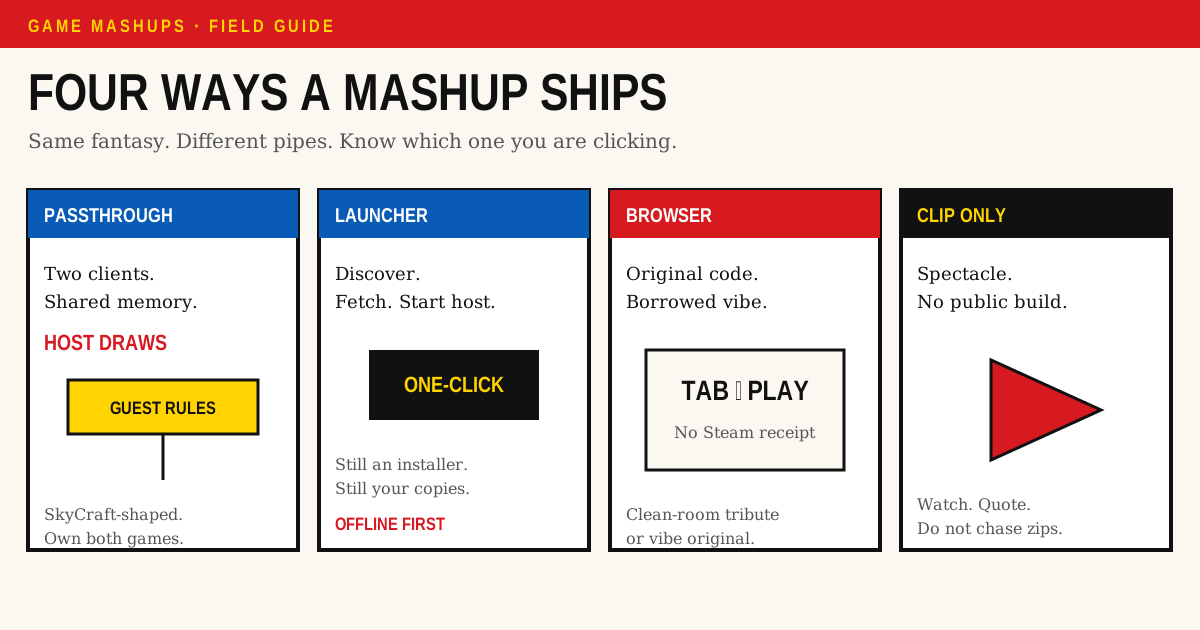
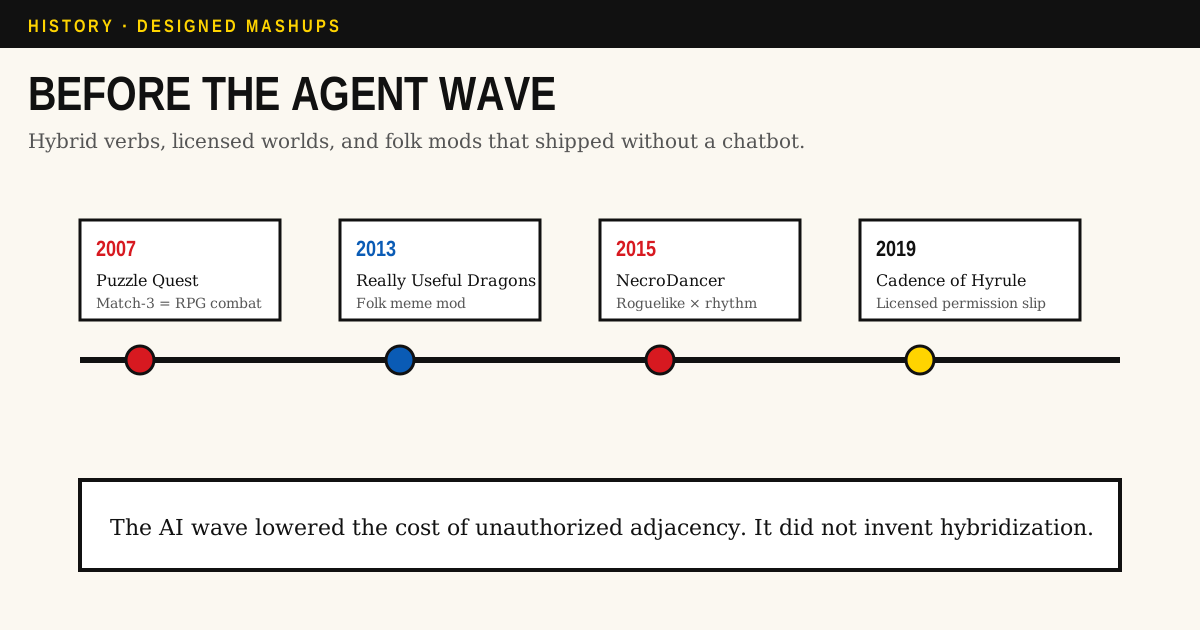
I would not bump it above a designed hybrid like Cadence of Hyrule or a deep install like SkyCraft. Different appetites. This one earns its Browser badge and a grade I am not going to soften.
I expected more. The idea is still clever. The presentation I saw—still cards, ballad soundtrack, mutation still pending, boss fight that yelled dodge and handed me another dead click—did not carry the weight of either parent. If the mutation side grows teeth later, I will reopen the tab. Until then, my line stands:
I give the game a D for effort.