Scroll the 2026 timeline and you could be forgiven for thinking game mashups were invented the week someone filmed Minecraft tools in Elden Ring. They were not. Designers have been smuggling systems across genre borders for as long as store shelves needed a new adjective. The difference is authorship: those older mashups were designed on purpose, scheduled, tested, and—when the lawyers were awake—licensed. They are the control group for today's agent-built collisions.
This is not a museum guilt trip. It is a reminder that the pleasure you feel when two rulesets click is older than ChatGPT, older than SKSE, older than the word "modding" as a lifestyle. If you only chase Melty one-clicks, you miss the craft lessons sitting on Steam and Switch.
The best mashups feel inevitable after the fact and slightly insane in the design doc.
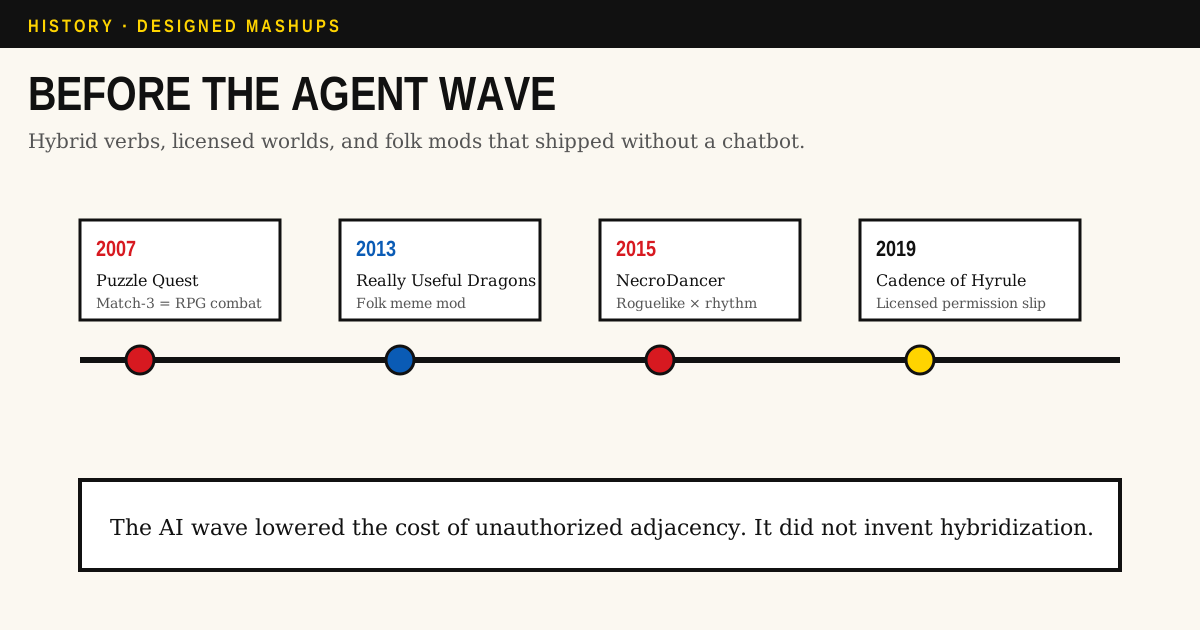
2007: match-3 learns to level up
Puzzle Quest: Challenge of the Warlords is the cleanest "designed mashup" sermon I know. Infinite Interactive, led by Warlords veteran Steve Fawkner, wrapped a Bejeweled-like board in RPG progression: skulls deal damage, colored gems feed mana, stars grant experience, and the overworld still wants quests, loot, and companions. Wikipedia's summary of Fawkner's account is almost too neat—he got hooked on Bejeweled, imagined Magic-like spells layered on match-3, and chased a publisher until D3 Publisher bit. Handheld SKUs reached North America in March 2007; the Steam PC edition lists 10 October 2007.
Why it still matters:
- The mashup is mechanical, not cosmetic. Matching is combat, not a minigame stapled to a JRPG.
- The fantasy is readable in one sentence, which is the same test viral AI clips pass—except Puzzle Quest had to survive retail buyers, not just quote-tweet counts.
- It spawned imitators and sequels for years, proof that a hybrid can become a genre lane rather than a one-off meme. The 2025 Immortal Edition return (listed on our Puzzle Quest entry via Steam app 3236710) is less important than the original insight: casual verbs can carry campaign weight.
Play it if you want to feel the click without installing a bridge between two modern AAA clients. It is the palate cleanser before SkyCraft.
Wikipedia's account of Fawkner's origin story is worth sitting with: he got hooked on Bejeweled, then imagined wrapping match-3 in Magic: The Gathering–style spells and a Final Fantasy Tactics–like campaign inside his Warlords setting, and chased publishers until D3 Publisher bit. The board that shipped is not "gems mean damage, full stop." Coloured gems feed mana for spells; skull tiles deal damage; other tiles grant experience and gold; wildcards can join a match. Class, level, and equipment change how much mana or damage a match yields. Before you swap tiles you can cast a spell you have the mana for—direct damage or a board effect such as clearing a tile type—then wait out a cooldown. Between fights, gold and treasures build a citadel with a forge for new equipment, a bestiary where you try to learn spells from captured opponents, and mounts to train. Companions join the party with combat bonuses of their own. That is the designed-mashup lesson AI clips still dodge: the hybrid is a stack of systems with verbs, not a costume on a match-3 grid.
2013: the joke mod as folk mashup
Not every pre-AI mashup wore a publisher badge. Really Useful Dragons (Nexus Mods file 48593; also mirrored on the Steam Workshop) replaces Skyrim's dragons with Thomas the Tank Engine characters—models, sounds, and some spells. Polygon wrote it up in December 2013 as the internet doing what the internet does (Polygon). The Nexus description is still gloriously deadpan: yes, the trains; no, not Ringo Starr's voice.
Call it a mashup or a meme swap—the cultural function matches what viral AI clips do now: force two childhood registers to share a screenshot. The difference is distribution ethics and tooling. Really Useful Dragons lived on mainstream mod platforms as a traditional asset replacement for a game you owned. It did not require decompiling a second commercial title into the first. Our IP-risk note marks it low in the relative sense we use on this site; that still is not a court ruling, and Thomas's rights holders remain free to be humorless.
Traditional mods like this are the ancestors of "creative mods" more than of shared-memory AI bridges. They taught players to treat Nexus and Workshop as normal. They also taught publishers that some jokes are cheaper to ignore than to sue—until they aren't. Folk mods were often weirder than retail; AI clips inherited that weirdness and sometimes skipped the "make it a game" part.
2015: the beat becomes the turn
Crypt of the NecroDancer (Brace Yourself Games; full PC/Mac/Linux release 23 April 2015, per the studio press kit) takes a roguelike's grid and insists your move is also a musical attack. Miss the beat, miss the tempo of the fight. Danny Baranowsky's soundtrack is not ambience; it is the clock. The Steam page still sells the pitch in the same words the press kit uses: hardcore roguelike rhythm game, optional personal MP3s, dance-pad support for people who mean it.
NecroDancer is a mashup of disciplines—roguelike threat and rhythm precision—more than a mashup of trademarks. That distinction matters when we compare it to Cadence of Hyrule. One proves the system. The other borrows a universe.
Lessons that still apply when the toolchain is an agent:
- Constraints make the joke fun. Moving only on the beat is a harsher designer than a prompt that says "make it cool."
- Audio is a mechanics channel, not a skin.
- Depth arrives from enemy patterns and item economy, not from a second IP logo in the corner.
NecroDancer also shows how a designed mashup earns sequels and ports without rewriting its joke. The studio press kit lists the PlayStation release as 2 February 2016 and the iOS edition as 30 June 2016—ports that still sell the same owning verb the April 2015 PC launch established: move on the music or eat the hit. The beat-grid kernel survived those console and mobile editions, plus years of DLC characters, because the hybrid was finished as a system before anyone asked it to wear a second logo. When modern mashup clips chase a guest franchise before they finish a verb, they skip the step that made NecroDancer durable enough to port.
2019: the permission-slip mashup
Cadence of Hyrule: Crypt of the NecroDancer Featuring The Legend of Zelda shipped on Nintendo Switch on 13 June 2019 (Brace Yourself launch post; Nintendo store listing). It is NecroDancer's rhythmic combat inside a Zelda-shaped quest structure, with remixed Legend of Zelda music and the right to put Link and Zelda on the box because Nintendo published the experiment.
This is the adult in the room for 2026's Mario-in-Elden-Ring clips. Cadence of Hyrule shows what a mashup looks like when both sides agree: marketing still works, stores stay up, and the design can sweat details that only appear when a publisher expects returns. Our catalog stamps it Buy and low IP risk for the boring, correct reason—it is licensed.
If you are a player, Cadence is also a taste test. Do you love the mashup because Hyrule is sacred, or because the beat-grid combat is delicious? Knowing which craving you have will tell you whether GameMash browser tributes will satisfy you or whether you need something closer to SkyCraft's dual-game ambition.
A lineage, not a ladder
It is tempting to draw a straight line: Puzzle Quest → NecroDancer → Cadence → SkyCraft → whatever Melty ships next. Reality is messier. These works solve different fantasies:
| Work | Fantasy | Permission model |
|---|---|---|
| Puzzle Quest | Match-3 is the RPG battle | Original IP in Fawkner's Warlords-flavored setting |
| Crypt of the NecroDancer | Roguelike is a rhythm game | Original IP |
| Cadence of Hyrule | NecroDancer in Zelda | Official Nintendo collaboration |
| Really Useful Dragons | Thomas as Skyrim dragons | Fan mod on owned game |
| SkyCraft (2026) | Minecraft player in Skyrim | Dual owned games + unofficial bridge |
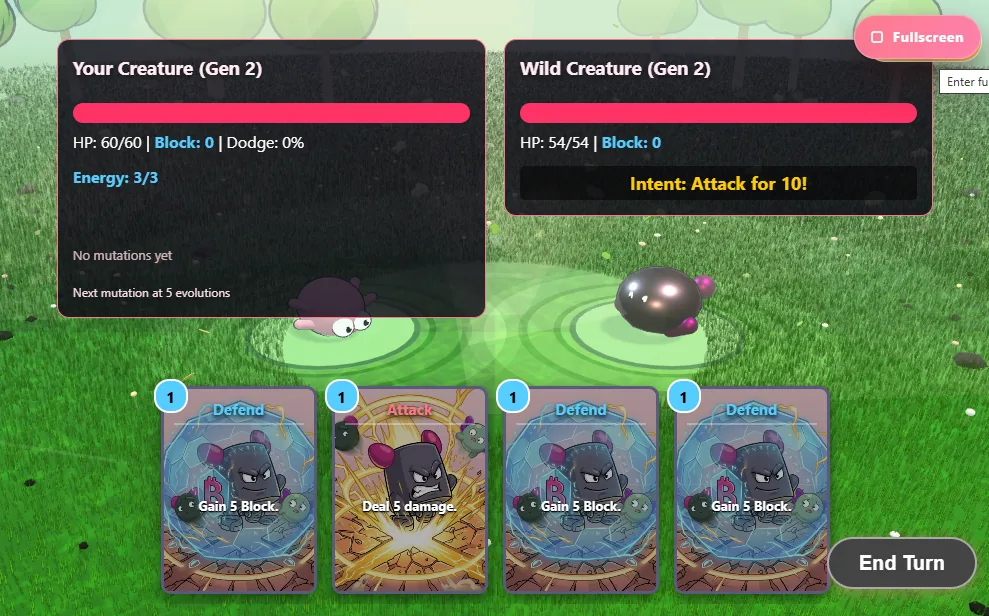
| Slay the Spore (2026) | Spire cards + Spore vibes | Clean-room browser original |
The AI wave did not invent hybridization. It lowered the cost of unauthorized, high-fidelity adjacency—sometimes as a real mod, sometimes as a clip that only looks like one. Designed mashups still win on playability hours per unit of drama.
What the designed era got right
Readable verbs. You can explain Puzzle Quest or NecroDancer to a friend in one breath—match gems to fund spells, or step on the beat. Many AI mashup clips cannot be explained without saying "and then the agent reverse-engineered…" which is not a verb you play.
Asymmetric contribution. In Cadence, Zelda contributes world language, items, and music; NecroDancer contributes the rhythmic combat kernel. In bad mashups, both sides contribute vibes and neither contributes a coherent verb. The guest system should change decisions, not just textures: Cadence's rhythm alters when you risk a step into a Lynel's face; a train dragon that only swaps a mesh changes the screenshot, while one that also rewrites shout behavior (as Really Useful Dragons hints with "more appropriate" spells) changes the play. AI mashups that pipe Minecraft inventories into Skyrim combat—see SkyCraft—are closer to the second tradition when they work.
Finishability and onboarding. Designed games have endings, balance passes, and accessibility toggles. Clip-only mods have a like count. Retail hybrids also teach you the hybrid in the first ten minutes because stores do not refund "I didn't get it." Browser tributes sometimes strand you with Spire assumptions and Spore cosmetics and no tutorial voice.
Honest shopping. Steam and the Switch eShop tell you the price. Viral clips tell you "link in replies." Knowing whether you need a license or a disclaimer is part of that honesty: Cadence paid the grown-up cost and became a store page; folk mods and AI bridges live in the disclaimer economy our IP-risk badges try to summarize.
What the designed era could not do
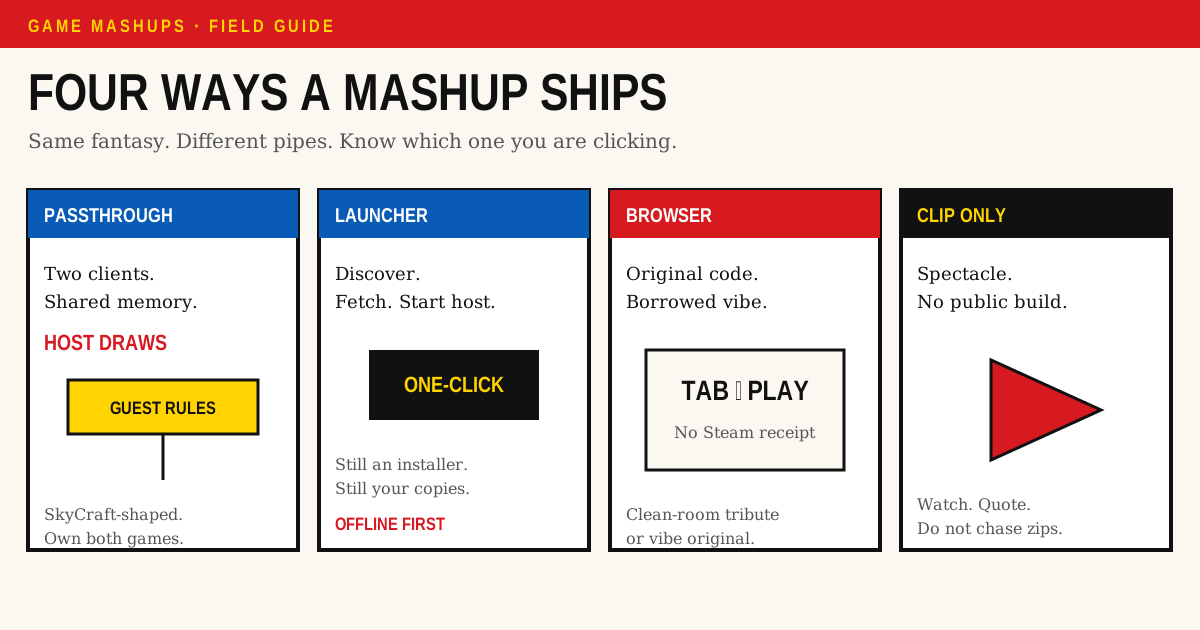
No 2007 publisher was going to ship "play Skyrim with Minecraft's inventory because both processes share a memory map." That fantasy needs cheap code assistance, porous PC platforms, and a culture that treats game clients as remixable media. SkyCraft's SKSE-plus-Fabric architecture, as described by its author, is a 2020s object. Melty's one-click packaging of mashups for games you own is a 2020s distribution bet. Browser tributes like GameMash are a 2020s compromise when the real binaries cannot ship.
Designed mashups also rarely chase pure surrealism at retail scale. That lane belonged to folk mods first—and now to clips that sometimes forget to become games.
How we cover both eras on Game Mashups
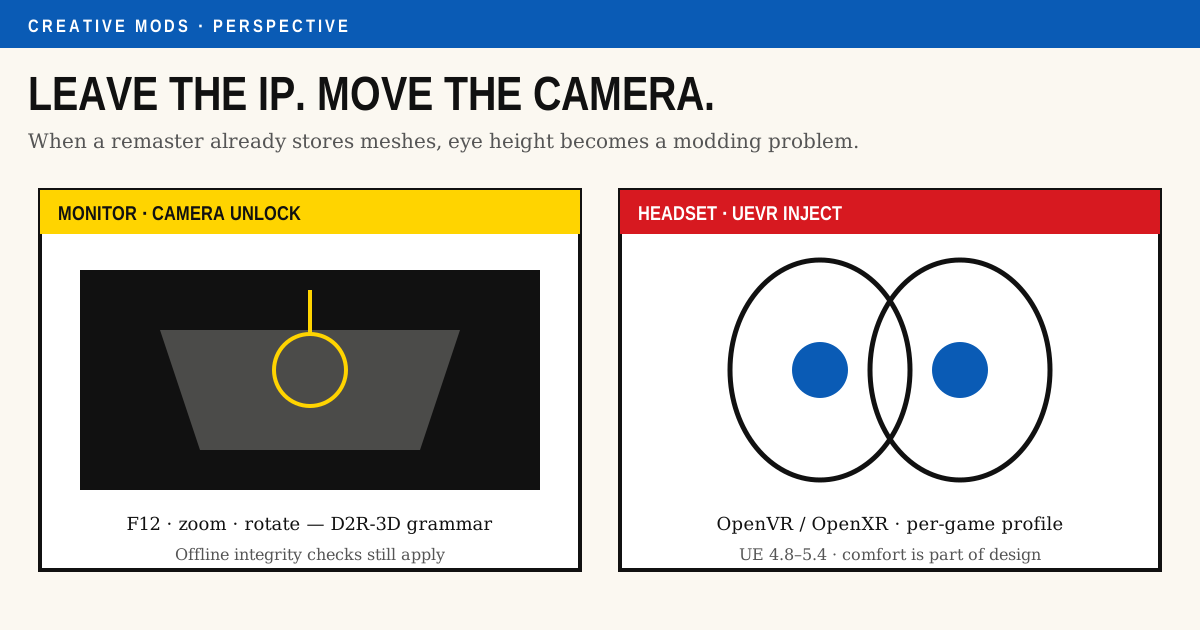
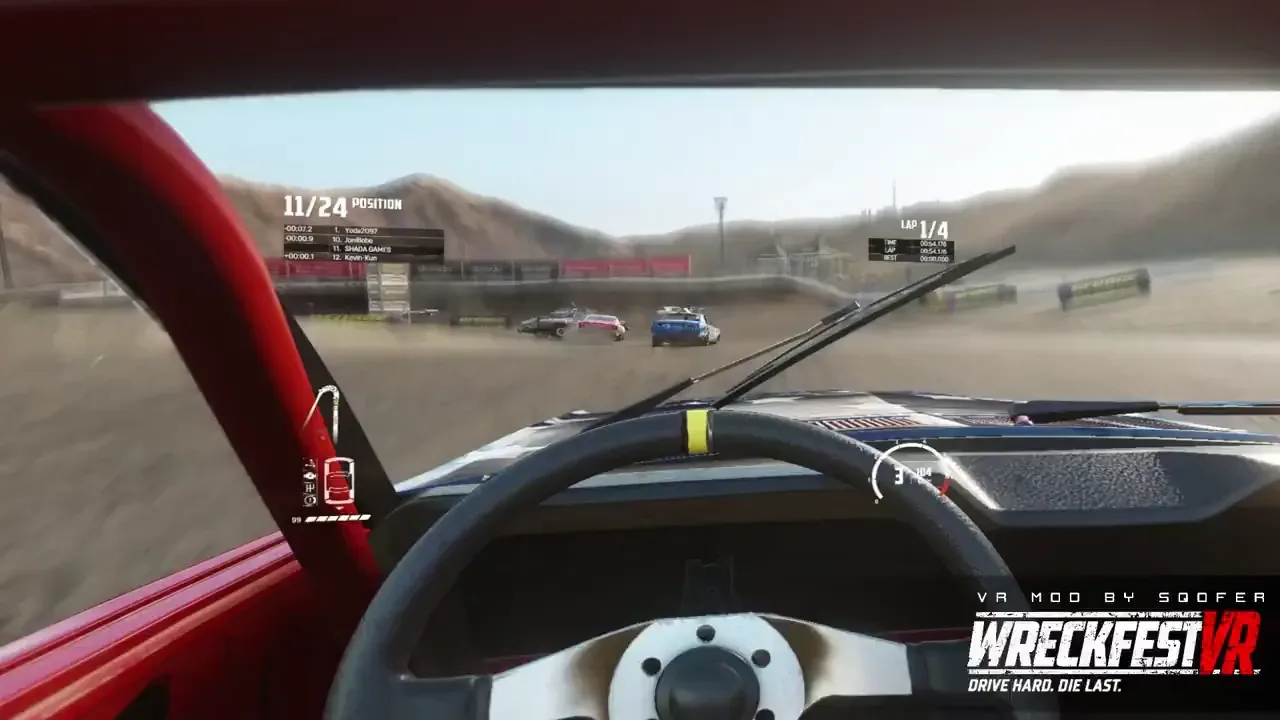
Our /mashups/ index deliberately mixes Buy badges with Browser, Melty, Download, and Clip only. That is a philosophical stance. Cadence of Hyrule and a forty-second Mario clip are not moral equals, but they are both answers to "what if these two things shared a stage?" The AI Game Mashups pillar sorts the new machinery. This essay keeps the older craft from being memory-holed. New Eyes on Old Worlds covers the third cousin—perspective mods that remix a camera instead of a second franchise.
When you read an IP-risk label on this site, hear it in history's key. Licensed design is not automatically virtuous art, and unofficial mods are not automatically theft of joy. They are different industrial processes for getting a hybrid into a player's hands. Our job is to say which process you are looking at before you sink an evening—or a legal risk—into the wrong one.
Slay the Spore at least knows its verb is the card turn; my reservations in the We Played It report are about presentation and depth, not about a missing premise. That is the designed-era test applied to a 2026 browser toy: name the owning verb, or admit you are watching a costume party.
The point of view, since you asked
I like agents. I like SKSE plugins. I also like the unfashionable truth that Puzzle Quest already solved the dopamine math of "one system wearing another system's skin," and that Cadence of Hyrule already proved Nintendo can say yes when the pitch is sharp enough. If 2026's mashup wave produces lasting games, they will look more like those designed hybrids—and less like a copyright notice in a quote tweet—than the hype cycle wants to admit.
Play the history when the timeline gets too loud. Buy NecroDancer when a clip-only Elden Ring mashup wastes your evening. Install Really Useful Dragons when you need a reminder that weirdness predates transformers. Keep Cadence of Hyrule in the rotation when someone claims publishers never take risks on hybrids—they do, rarely, when the pitch is precise.
Until then, we will keep listing both: the store page you can buy, and the GitHub zip you install at your own risk. History is not a cudgel against the new toys. It is the calibration weight on the scale.